Sintra, Portugal: Where Royal History Meets Romantic Architecture
Home › Travel Talk › Sintra, Portugal: Where Royal History Meets Romantic Architecture
Antonette Christine Pielago October 28, 2026
Just 40 minutes from Lisbon, Sintra rises from the Atlantic mist in a swirl of forested hills, storybook palaces, and centuries of layered history. In 1995, UNESCO recognized Sintra's Cultural Landscape as a World Heritage Site for the rare harmony between nature and architecture formed by its palaces, gardens, and rugged granite peaks. This is not simply a town with monuments; it is a carefully composed landscape that helped define European Romanticism and still feels remarkably intact today.
Sintra’s Remarkable History
Human presence in the Sintra hills long predates royal palaces. Archaeology reveals prehistoric tombs, Bronze Age settlements, and later Roman occupation, evidence that the landscape has drawn people for millennia. By the Middle Ages, a Moorish fortress crowned the ridge, guarding the approaches to Lisbon. After the Christian reconquest, Portuguese monarchs increasingly turned to Sintra as a cool summer refuge from the capital’s heat, commissioning residences and hunting estates on the slopes of the Serra de Sintra.
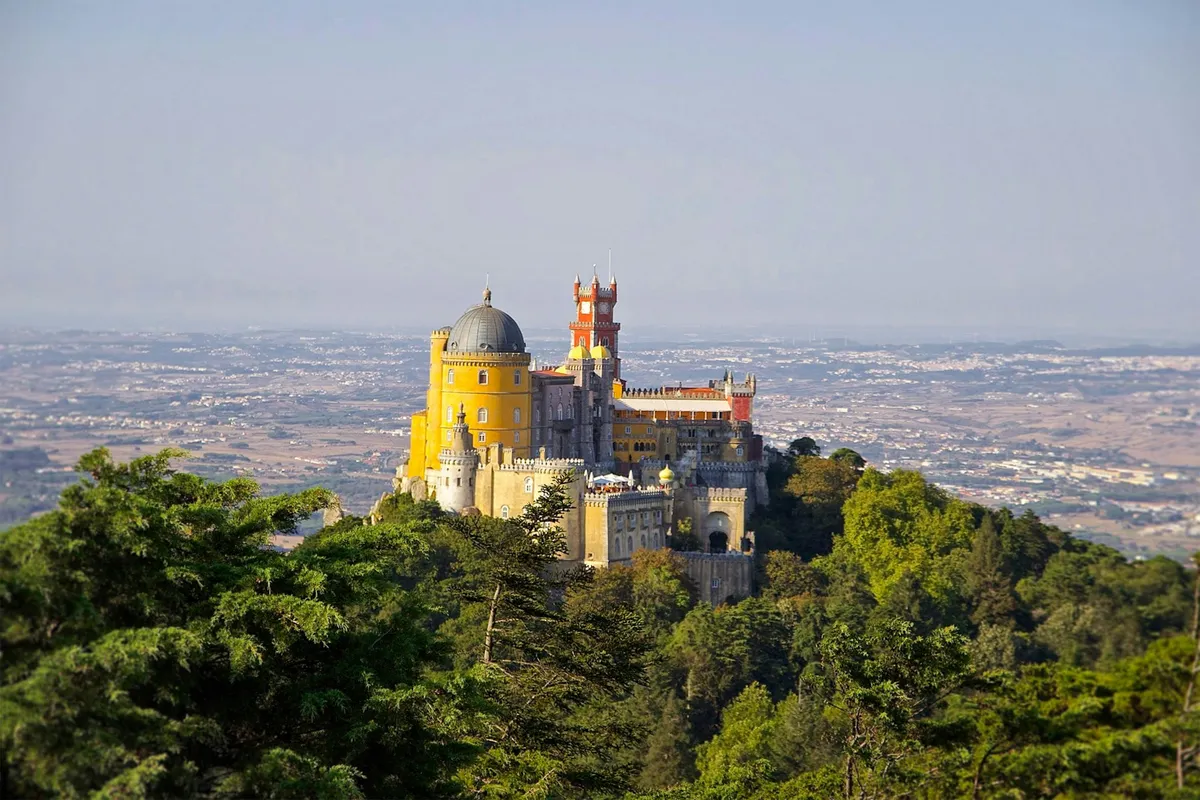
The turning point came in the 19th century, when Sintra became a laboratory for the Romantic movement. King Ferdinand II, of German origin and deeply influenced by Romantic taste, transformed the ruins of a Hieronymite monastery into the exuberant Pena Palace, set within a vast park planted with exotic species, winding paths, and deliberately picturesque viewpoints. UNESCO describes Sintra as the “first center of European Romantic architecture,” highlighting how its villas, palaces, and gardens inspired similar landscape compositions across Europe. The 1995 World Heritage inscription under criteria (ii), (iv), and (v) recognizes this fusion of artistic vision, historical architecture, and a dramatic natural setting as an Outstanding Universal Value.
Architectural Landmarks: Four Essential Icons
Sintra’s skyline is punctuated by palaces and fortifications, each telling a different chapter of Portuguese history. Together, they form the core of the Cultural Landscape of Sintra and are carefully managed today by Parques de Sintra – Monte da Lua, the public company responsible for conservation within the Sintra-Cascais Natural Park.
Pena Palace (Palácio da Pena) – Completed in the mid‑19th century, Pena is a manifesto of Romantic eclecticism. Its brightly painted walls combine Neo‑Gothic towers, Moorish arches, Renaissance details, and even references to Manueline ornament. Inside, the palace preserves royal interiors that evoke the final decades of the Portuguese monarchy, while its park, with lakes, follies, and rare trees, exemplifies Romantic landscape design praised by UNESCO.
The Moorish Castle (Castelo dos Mouros) – Strung along the granite ridge above the town, this early medieval fortress reflects the period of Islamic rule in the Iberian Peninsula. Its restored ramparts offer sweeping views over Sintra, the Atlantic coast, and the Pena Palace above, making clear how the site once controlled access to Lisbon and why its silhouette remains one of Sintra’s most iconic.
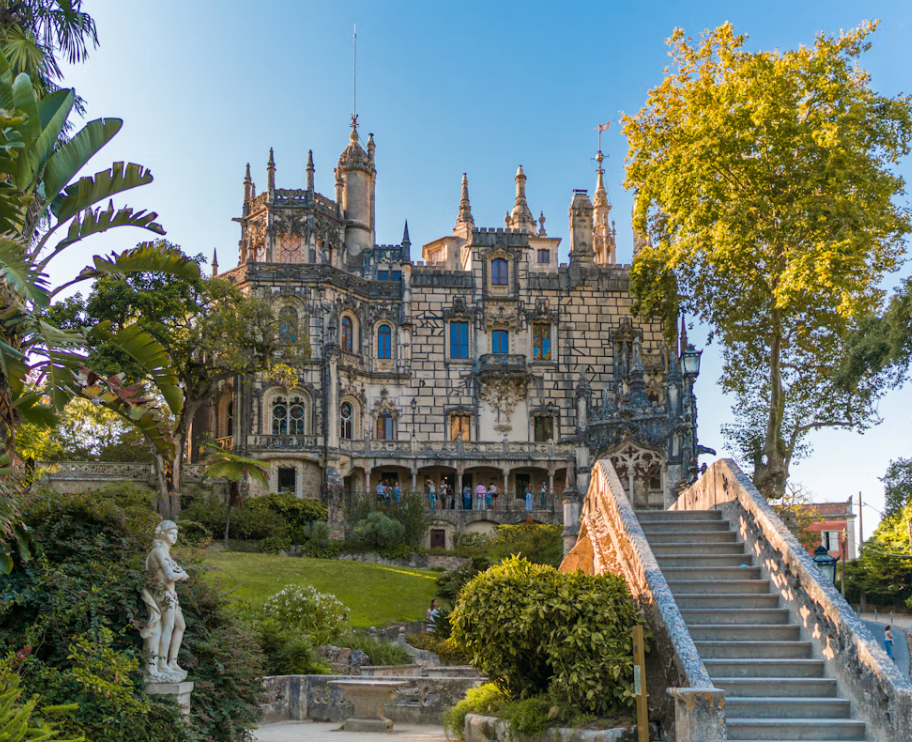
Quinta da Regaleira – Built at the turn of the 20th century for a wealthy Portuguese-Brazilian owner, this estate blends Gothic Revival architecture with lush, symbolic gardens. Its famous Initiation Well, underground tunnels, grottoes, and ornamental lakes reference esoteric traditions, Freemasonry, and Romantic literature, making the property a fascinating counterpart to the royal palaces on the hilltops.
National Palace of Sintra (Palácio Nacional) – At the heart of the historic town, this palace was a favored residence of Portuguese kings from at least the 15th century. Its twin conical chimneys dominate the skyline, while the interiors feature intricate Mudéjar‑style azulejos, painted ceilings, and rooms tied to key moments in royal life. Unlike Pena's Romantic fantasy, the National Palace offers a more grounded view of courtly life over several centuries.
Beyond the Palaces: Gardens, Hills, and Sweet Traditions
Part of Sintra’s appeal lies in the way its monuments are embedded in a living landscape. The Serra de Sintra, now protected within the Sintra‑Cascais Natural Park, is a granite massif cloaked in dense vegetation, from native oaks and laurels to exotic species introduced in the 19th century. Romantic gardens such as those at Pena, Monserrate, and Regaleira were designed to feel almost wild, with winding paths, sudden viewpoints, and carefully framed vistas of sea and sky.
In the historic center, narrow lanes wind between pastel‑fronted houses and tiled façades. Small shops sell regional crafts and the pastries Sintra is renowned for. Two stand out: buttery travesseiros, puff‑pastry “pillows” filled with almond and egg cream, and queijadas de Sintra, small tarts combining fresh cheese, sugar, and cinnamon. These recipes, associated with local convent traditions, offer a tangible link between Sintra’s everyday life and its long history of hospitality to travelers, writers, and the royal court.
Planning a Visit from Lisbon
Sintra is easy to reach from Lisbon, but thoughtful planning will make your day smoother. The most straightforward option is the frequent suburban train from Rossio Station in central Lisbon to Sintra, a journey of around 40 minutes. Buses, taxis, rideshares, and private tours are also available, while driving takes roughly 30 minutes depending on traffic. However, parking in Sintra is limited, and local authorities have introduced traffic restrictions on the narrow roads leading up the hills to manage congestion and protect the landscape.
Once in town, expect steep gradients between the center, the Moorish Castle, and Pena Palace. Official tourist buses, local taxis, and authorized transfer services connect the main sites, but walking still requires good footwear and a reasonable level of fitness. To protect the World Heritage landscape, private cars are restricted on several roads, so it is wise to rely on public or official transport rather than driving between monuments.
For opening hours and ticketing, always check the latest information on official websites such as Parques de Sintra, the Pena Palace, and the individual estates. Many sites, including Pena, now use timed entry for interiors, so advance online booking is strongly recommended, especially in high season and on weekends. Prices, schedules, and access rules can change, especially in response to conservation needs or visitor numbers, so check official sources for up-to-date details when planning your itinerary.
A Lasting Impression
What distinguishes Sintra is not any single palace or viewpoint, but how centuries of Portuguese history weave into one coherent landscape. Prehistoric tombs, medieval walls, Renaissance tiles, and 19th‑century Romantic fantasies all share the same granite slopes and ocean‑facing winds. UNESCO’s recognition of the Cultural Landscape of Sintra affirms that this is more than a picturesque destination; it is a rare example of a place where nature and culture have evolved together in a continuous, carefully preserved dialogue.
For travelers interested in architecture, literature, or landscape design, Sintra offers a concentrated journey through Portugal’s past, from Moorish fortresses to Romantic villas hidden among camellias and cedars. For those simply seeking beauty, it provides cool shade, distant sea views, and the quiet pleasure of a warm pastry enjoyed on a cobbled square beneath royal chimneys. With thoughtful planning and a little unhurried time, Sintra reveals itself as a place where history feels close, yet the atmosphere is unmistakably serene.
When you are ready to explore Sintra and the wider Lisbon region, Stay Balanced Travel can help you shape an itinerary that respects the pace of this remarkable landscape while ensuring you experience its most evocative corners. Portugal’s royal hills await discovery, with guidance that keeps your journey as harmonious as the scenery itself.
Ready to explore Sintra's enchanting palaces and rich history?
to connect with me and start planning your multi-generational family travel.
KEEP EXPLORING
Ready for more travel inspiration?
Head back to Travel Talk for more destination ideas, planning inspiration, and travel stories.