Salt & Stone: A Luxury Journey Through Malta and Sicily
Home › Travel Talk › Salt and Stone in Malta and Sicily: A Luxury Journey Beyond the Façade
Antonette Christine Pielago November 8, 2026
The first thing Malta teaches is that stone can hold heat, faith, siegecraft, and silence all at once.
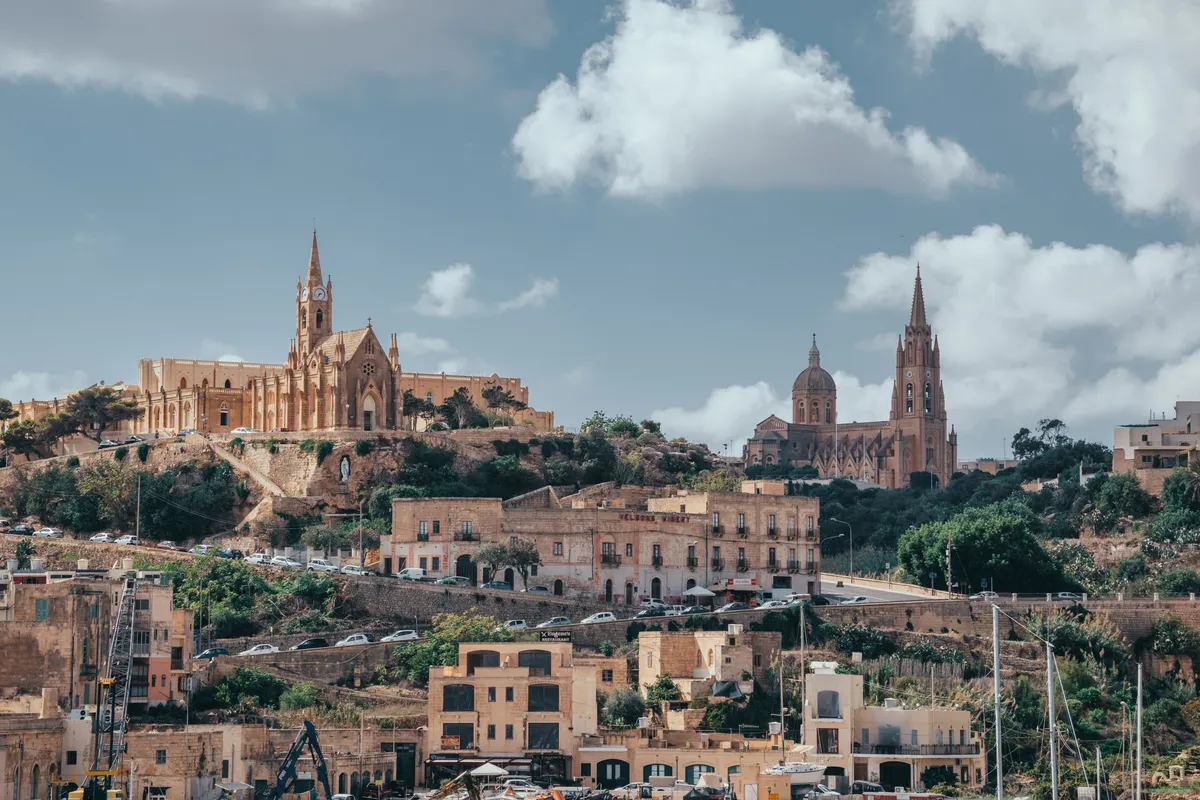
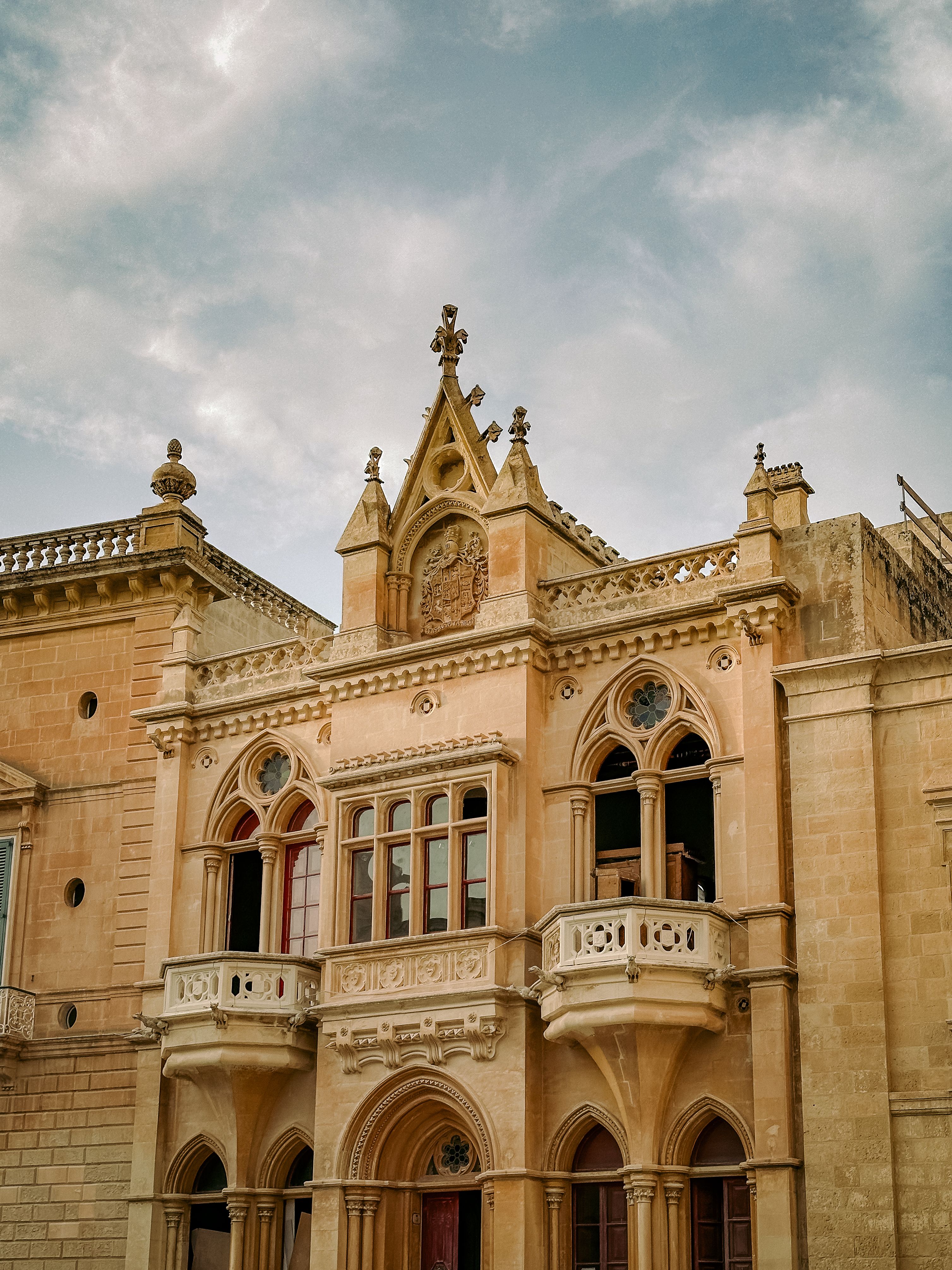
At midday in Valletta, the limestone seems almost liquid. It glows honey, then pearl, then a pale shade of gold that belongs only to islands where the sun has had centuries to practice. Look closer and the surface changes. A church façade becomes a lesson in Baroque persuasion. A bastion wall becomes a diagram of military anxiety. A carved balcony becomes a memory of Arab, Sicilian, Spanish, and British hands passing through the same narrow streets.
Then comes the salt.
It is in the wind along the Grand Harbour, in the old pans cut into Gozo’s coast, in capers curing in jars, in the brine of olives, in the clean edge of a white wine made from Girgentina grapes. Cross the water toward southeastern Sicily and salt returns in another register: sea air around Ortigia, anchovies and tuna histories near old tonnare, tomatoes warmed into sweetness near Pachino, and the mineral finish of wines from Noto and Vittoria.
This is the idea behind Salt & Stone, a proposed private journey designed for travelers who want more than a beautiful Mediterranean sequence. Malta and southeastern Sicily are easy to photograph. They reward those who read them.
Stone is the first language of Malta
Malta’s architecture begins before architecture usually enters the conversation.
Malta's megalithic temples, recognized by UNESCO, predate both Stonehenge and the pyramids of Egypt. Sites such as Ħaġar Qim, Mnajdra, and Ġgantija on Gozo show a society able to quarry, move, align, and shape enormous limestone blocks with remarkable intent. The temples are not ruins in the romantic sense alone. They are evidence of engineering, ritual, astronomy, and social organization from the late Neolithic world.
At Mnajdra, the southern temple is often discussed for its solar alignments. At Ħaġar Qim, overlooking the sea, the setting intensifies the question of why humans build where they do. These places resist easy interpretation. That is part of their power. They do not give themselves away through labels and timelines. They ask for patience.
Beneath the surface, literally, the Ħal Saflieni Hypogeum offers another kind of astonishment. This underground complex, also UNESCO-listed, was carved into the living rock and used in prehistoric times. Its chambers suggest both technical skill and devotional imagination. In Malta, stone is never just material. It becomes a threshold.
The same is true in Mdina, the old capital, where silence is part of the design. Narrow lanes pull shade out of the sun. Heavy doors conceal palazzi. The city’s layered past includes Roman, Arab, Norman, and later aristocratic influences, all compressed inside walls that still seem to slow time.
For a private journey, these sites invite a rare pace. Not a checklist. A sequence of encounters. A curator at dawn. A conservation conversation away from the busiest hour. A walk that begins with geology and ends with a glass of wine on a terrace, the limestone still warm underfoot.
Valletta was built as an argument
Valletta is often introduced as a capital city the Knights of St. John built after the Great Siege of 1565. That is accurate, but it does not quite capture the audacity.
Founded in 1566, Valletta was planned as a fortified city on a peninsula between two natural harbors. The military engineer Francesco Laparelli, sent by the pope, helped design its defensive form. The Maltese architect Girolamo Cassar shaped many of its early civic and religious buildings. The result was a city that understood beauty and survival as connected disciplines.
Its grid was practical, not merely elegant. Straight streets allowed air to move through the city and improved circulation in heat. Bastions, cavaliers, curtain walls, and ditches expressed the science of fortification in stone. The Grand Harbor was not scenery then. It was a strategic theater.
The Co-Cathedral of St. John offers another lesson. Its exterior is restrained, almost severe. Inside, it erupts into gilding, carved stone, marble tombs, and Caravaggio’s monumental painting, The Beheading of Saint John the Baptist. The contrast is deliberate. Valletta’s power lies in this tension between discipline and drama.
A sophisticated journey through Valletta should not rush past that tension. It should pause at Fort St. Elmo, where military history meets maritime geography. It should cross to the Three Cities, Vittoriosa, Senglea, and Cospicua, where older harbor communities speak in a lower, more intimate register. Consider the city as a machine, a stage, and a spiritual instrument.
The stone has always done more than stand.
The Mediterranean enters through the kitchen
Salt is the more elusive half of the story. It does not announce itself as architecture does. It arrives on the rim of a plate, in drying fish, in preserving capers, in the memory of ships.
Malta’s food carries the marks of its position between Europe and North Africa. The Maltese language itself, Semitic in structure and deeply enriched by Italian, especially Sicilian, tells part of the story. So does the table. There is ġbejna, the small cheeselet often made from sheep’s or goat’s milk. There are pastizzi, flaky and generous. Rabbit stew is widely considered a national dish. There are lampuki when the season allows, often cooked in pies or with capers, tomatoes, olives, and herbs.
The island’s wines are still less widely known than they should be. Indigenous grapes such as Girgentina and Ġellewża offer a compelling reason to drink locally, not out of obligation but curiosity. Girgentina can bring freshness and citrus lift. Ġellewża, often used in reds and rosés, belongs to a wine culture that has grown more confident in recent decades.
On Gozo, the old coastal salt pans near Xwejni Bay make the metaphor literal. Cut into limestone beside the sea, they speak of labor, weather, and inheritance. Salt here is not a decorative idea. It is work shaped by season and family memory.
A journey attentive to salt would not treat meals as pleasant pauses between monuments. It would make the table part of the archive.
Sicily is not an add-on; it is the continuation
The short crossing between Malta and Sicily is more than a logistical convenience. It follows an old current.
For centuries, Malta was tied to Sicily through rule, trade, religion, language, and food. Before the Knights of St. John received Malta in 1530, the islands had long formed part of the Kingdom of Sicily. The relationship left its mark on administration, nobility, religious life, and everyday speech. Maltese culture is distinct, but its proximity to Sicily is not incidental.
Southeastern Sicily deepens the story of stone in a different way.
Syracuse, once one of the great cities of the Greek world, offers theaters, quarries, catacombs, and the island of Ortigia, where ancient, medieval, and Baroque forms sit close enough to argue with each other. The Greek Theatre speaks to civic ambition and performance. The Latomie, ancient stone quarries, reveal the harder edge of construction and empire. Ortigia’s cathedral, built around the columns of a Greek temple to Athena, is one of the Mediterranean’s most striking examples of architectural absorption. One sacred structure did not cleanly replace another. It enveloped it.
Then comes the Val di Noto, rebuilt after the catastrophic earthquake of 1693. Towns such as Noto, Ragusa, Modica, and Scicli, recognized by UNESCO for their late Baroque architecture, show reconstruction as cultural will. Their façades curve and theatrical stairways rise, but beneath the beauty lies a disciplined response to disaster. Urban planning, craftsmanship, patronage, and faith converged in stone.
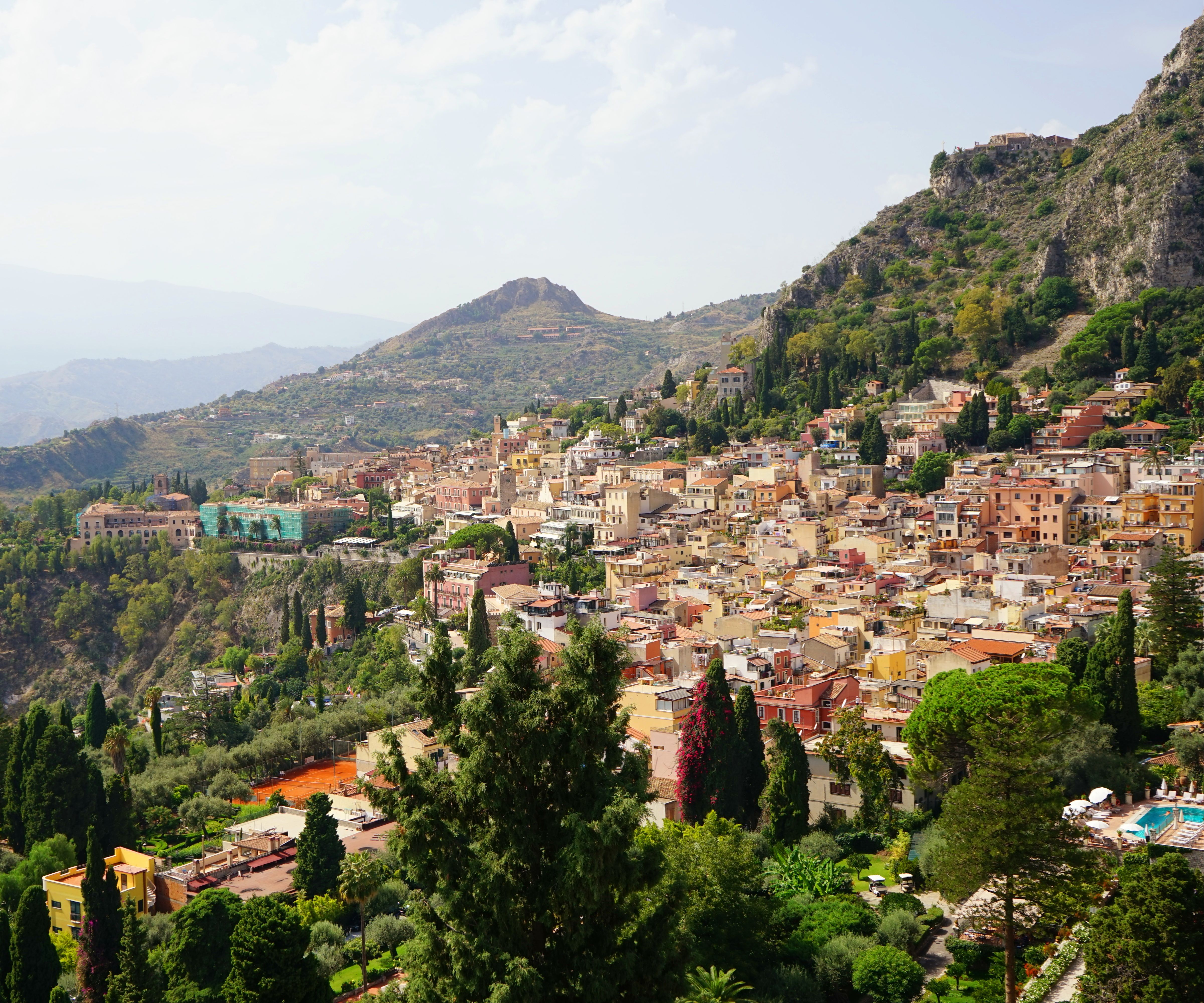
Noto’s palazzi catch the evening light with almost Maltese warmth, but the mood is different. Sicily’s Baroque has a sensuousness that Malta’s fortified capital often holds in check. In Ragusa Ibla, streets fold into ravines and piazzas open like sudden breath. In Modica, stone climbs hills in stacked apparitions of church fronts, balconies, and tiled roofs.
The connection between Malta and Sicily is not a matching set. It is a conversation across water.
Wine, chocolate, and the intelligence of place
Southeastern Sicily brings salt back through appetite.
Around Noto and Pachino, the sea, sun, and soil shape tomatoes, almonds, olive oil, and wines with a clear sense of origin. Nero d’Avola, Sicily’s best-known red grape, has deep roots in this part of the island. Frappato, often associated with the Vittoria area, brings fragrance and brightness. Together, they form Cerasuolo di Vittoria, Sicily’s only DOCG wine, a red that can feel both structured and graceful.
This is the kind of wine that belongs with conversation rather than ceremony. It suits a long lunch where the architecture outside the window still lingers in the mind.
In Modica, chocolate tells another story of movement and preservation. The city is known for a distinctive style of chocolate with a granular texture, often linked to methods brought by Spanish influence. It is not glossy or overly refined. Each bite holds sugar crystals, spice, and history.
Ragusa brings Ragusano cheese, a stretched-curd cow’s milk cheese with protected status. Coastal villages bring fish, bottarga, and the lingering memory of tuna fisheries. At Vendicari, nature, archaeology, and maritime food history meet, with old structures recalling salt, fishing, and preservation along one of Sicily’s most evocative coastal reserves.
Luxury here has little to do with excess. The pleasure lies in exactness: the right producer, the right hour, the right explanation from someone whose family has worked the soil or sea for generations..
A private journey shaped by access and attention
A journey called Salt & Stone should be designed with restraint. The theme is strong enough. It does not need theatrical embellishment.
What it needs is access, sequencing, and intelligence.
One day might begin inside a prehistoric Maltese temple before the heat rises, then shift to a conversation about conservation and limestone. Lunch could focus on Maltese ingredients paired with local wines, then move toward Valletta’s fortifications with a guide who understands military engineering as well as art history.
Another day could follow maritime routes through the Grand Harbour and the Three Cities, ending in a private tasting that links Sicily and Malta through grapes, trade, and taste.
In Sicily, the journey might shift from Syracuse’s Greek and Baroque layers to the reconstructed towns of the Val di Noto. The experience would not ask travelers to consume every monument. It would choose fewer places and read them properly.
The most meaningful elements might be the quietest:
Standing in the shadow of a bastion while someone explains why the wall angles as it does.
Seeing Greek columns embedded in a Christian cathedral.
Tasting a Maltese white beside a Sicilian red and recognizing the sea between them, not as separation but as exchange.
Walking through a town rebuilt after catastrophe and noticing how beauty can also be civic repair.
This is the promise of Salt and Stone in Malta and Sicily: a luxury journey beyond the Façade. It favors context over spectacle. It treats food and wine as cultural evidence. It understands that architecture is not frozen history, but living argument.
The journey beyond the beautiful façade
Malta and southeastern Sicily are easy to admire. That is the beginning, not the point.
The deeper reward comes from tracing how people used stone to honor gods, resist invaders, rebuild after earthquakes, store the dead, shelter the living, and face the sea. It comes from tasting how salt preserved food, carried trade, sharpened wine, and shaped daily life across islands that have never been as isolated as they appear on a map.
For Stay Balanced Travel, Salt & Stone is imagined as a private journey for those who want meaning alongside beauty. Malta offers the elemental force of limestone, fortification, and memory. Southeastern Sicily answers with Baroque reinvention, Greek depth, and a generous table.
Between them lies the Mediterranean, glittering and practical, ancient and immediate. Cross it with attention, and the façade opens. Click here to start planning your next journey with Stay Balanced Travel.
KEEP EXPLORING
Ready for more travel inspiration?
Head back to Travel Talk for more destination ideas, planning inspiration, and travel stories.